

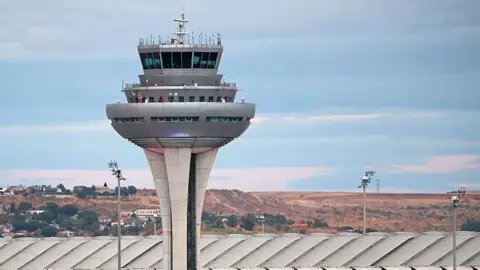
The Spanish government has denied overflight rights to American military aircraft involved in attacks on Iran, as confirmed by Madrid's defense minister Margarita Robles.
Official Stance
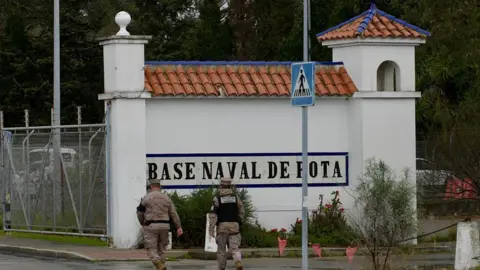
"We refuse to permit the use of the Rota and Morón for any activities related to the Iran hostilities," the minister declared, explaining that Spain had "expressed this stance to the United States from the outset."
Foreign affairs minister José Manuel Albares said the purpose of the decision was to "avoid any action that could prompt an intensification in this war."
International Tensions
The US has not yet responded, but President Donald Trump has previously threatened to enact a complete economic blockade on Spain over its resistance to the Iran war.
Spanish Prime Minister's Stance
Ever since the outbreak of the conflict in the end of February, the Spain's leader Pedro Sánchez has been one of the most vocal opponents of the US and Israeli attacks, calling them "irresponsible" and "illegal."
In early March, the Prime Minister stated Spain had denied the US use of the two shared military bases at Rota and Morón, located in Andalusia.
"Ours is an independent state that does not wish to take part in illegal wars," the Prime Minister declared.
Last Wednesday that "every request that involved missions related to the campaign in Iran were denied - all of them, including those of support planes."
Operational Impact
Some US bombers involved in operations in Iran are based at the RAF Fairford base in Gloucestershire, following a British decision to a petition from the US.
Aircraft taking off from there will be required to fly around a large portion of the region - by flying over the eastern Atlantic or over France.
Reports indicate that aircraft would only be able to enter Spain's skies or land at the bases solely during an urgent situation.
Broader Context
In a televised address, the leader spoke about wars in Ukraine and Gaza and said the Spanish government's policy could be described as "opposed to conflict."
Subsequently, the Iranian embassy in Spain indicated Tehran would be receptive to proposals from Madrid about transit through the Strait of Hormuz because Spain was "adherent to global norms."
Global Oil Impact
Nearly 20% of the international petroleum normally passes through the narrow waterway between Iran and the tip of the Arabia.
For weeks, the risk of strikes by Tehran's military assets has halted traffic, causing crude costs to soar.


